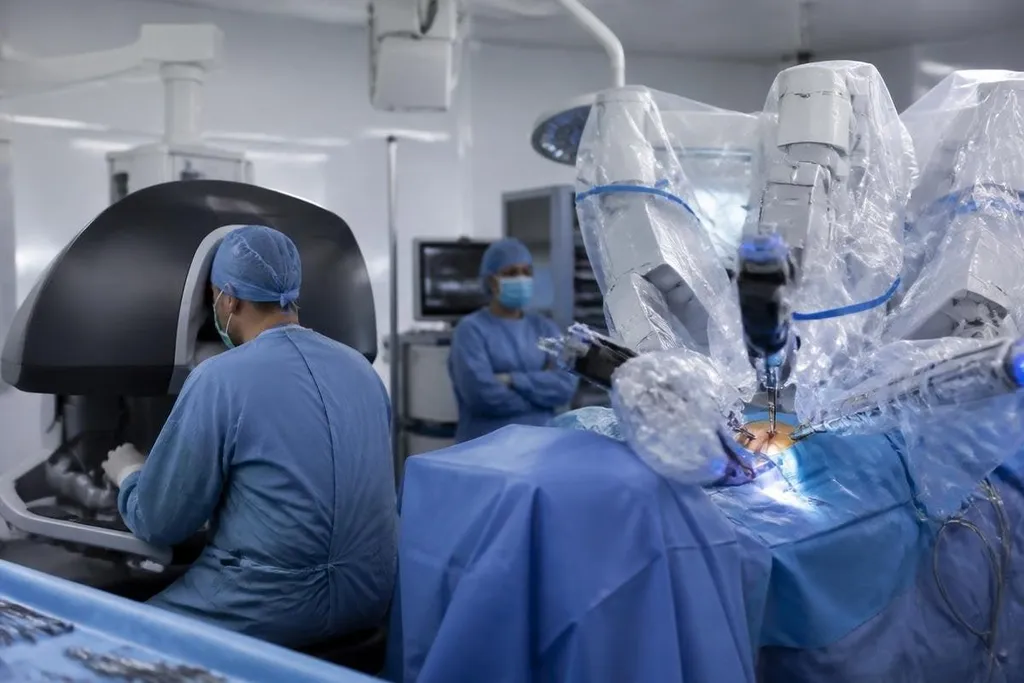
A surgical robot can steady an instrument, improve a camera view, and help a surgeon reach tight spaces. The harder question is whether it makes an operation safer, faster, or easier to repeat across real hospitals.
The global race will be decided by evidence from operating rooms, not by how smoothly a short demo runs.
- The buyer: hospitals need procedure data, training needs, service terms, and a clear cost model.
- The surgeon: the console, instruments, camera, and control software must reduce work without hiding important feedback.
- The patient: any claimed gain must connect to safety, recovery, or a lower chance of harm.
What a surgical robot actually changes
A surgical robot does not replace the surgeon by default. It gives the surgeon a control system linked to instruments inside the patient, often through small access points.
That system can filter hand movement, scale motion, hold a camera, and move an instrument through several joints. Each feature matters only when it solves a problem in a named procedure. A steadier tool may help during a fine stitch, while a clearer image may help the surgeon see tissue edges.
The control loop also matters. Sensors measure the position of the arms and instruments, software sends commands, and motors carry them out. A delay, a blocked view, or a poor hand position can change how the surgeon works, so these details belong in any serious review.
The race has several finish lines
Better hardware is one part of the work. A hospital also needs sterile instruments, staff training, maintenance, software updates, and a safe way to stop the system when something goes wrong.
Robot makers may focus on smaller tools or more flexible arms. Hospitals may care more about setup time, instrument cost, room layout, and how many staff members the system needs. Surgeons may value touch feedback, camera control, or the feel of the hand controls.
Those priorities can point in different directions. A smaller arm may fit one room better but limit the range of instruments.
A large instrument set may support more procedures while adding cleaning and storage work. The useful comparison is always tied to the operation and the hospital that will run it.
A surgical robot’s claimed precision needs a named procedure, test setting, and result. Robot24 can place those details beside company and machine claims before the next section sets out the proof standard.
What proof should look like
A maker's video can show that a robot completed a task. It cannot, by itself, show that patients had better outcomes or that a hospital can run the system at a useful cost.
Good proof should name the procedure, the number of operations, the surgeon training level, and the result being measured. It should also explain the cases where a person stopped the robot or took control. Those details tell you how the system behaves outside its best clip.
Clinical evidence has its own limits. A result from one hospital may not carry over to another with different staff, instruments, patient mix, or operating-room layout. That does not make the result useless. It tells you what still needs checking before a purchase.
Cost needs the same care. The purchase price is only one line. Disposable instruments, service contracts, staff time, room changes, training, and software fees can shape the yearly bill. A lower machine price may leave a hospital with higher running costs.
Where the hard problems remain
Surgical work demands more than accurate movement. The robot must deal with tissue that shifts, fluid that blocks the view, tools that wear, and anatomy that differs from one patient to another.
Autonomy adds another question. A system may hold a camera or repeat a planned motion while the surgeon controls the operation. That is different from choosing the next action without direct input. Any claim about autonomous surgery needs a clear description of what the software decides and what the surgeon still controls.
Safety also depends on the room around the robot. Staff need clear warnings, reachable stop controls, backup tools, and a plan for power or software failure. A robot can work as designed and still create risk if the wider process is poorly prepared.
I'd judge a surgical robot by the extra work it removes without taking useful control away from the surgeon.
A buyer's checklist
Use these points before a hospital signs a contract:
- Name the procedure: ask which operation the system supports and what result it is meant to improve.
- Request case data: check the number of procedures, the hospitals involved, and the measured outcomes.
- Map the full bill: include instruments, service, training, room changes, and staff time.
- Test failure handling: ask how the team stops the robot, changes tools, and continues by hand.
- Check surgeon control: identify every task the software performs and every task that still needs direct input.
- Plan local proof: run a limited review with the staff, room, and patient group that will use it.
The next useful step for this field is clear: makers need to publish procedure-level evidence that hospitals can check, compare, and repeat. Until that happens, the better surgical robot is the one with the clearest limits and the strongest record in the operation you actually perform.